
AppSalvager allows you to combat the issue of repeating crashes on app startup. Failed data migration, SDKs not handling their errors correctly, corrupted data...there are many reasons why this can happen.
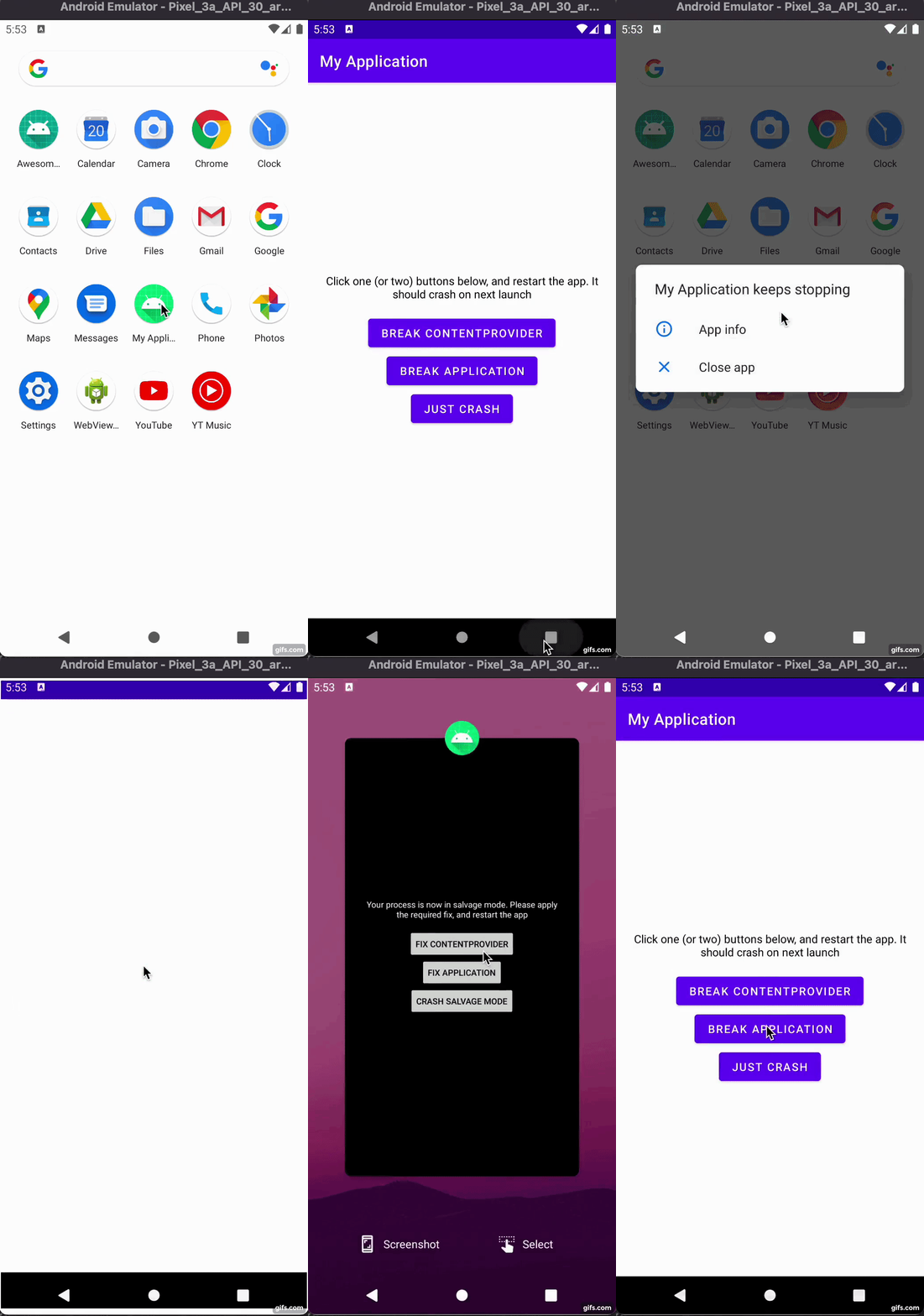
- Add
implementation 'io.github.drbreen:appsalvager:0.1.0'to your module dependencies. - Override
attachBaseContext(Context)in yourApplicationobject. - Call
AppSalvager.install(AppSalvager.Config)there. - Override
Application.onCreate(), and right after callingsuper.onCreate, check boolean flagAppSalvager.inSalvageMode. If this flag istrue, then you should abort normalonCreateflow and return as early as possible (ideally, right after the check). Not following that can lead to salvage mode itself crashing.
AppSalvager.Config contains following fields:
-
policyis an object implementingSalvageModePolicyinterface. This object will determine if exceptions history should trigger salvage mode. You can use one of the default policies, which will be listed shortly. -
createSalvageView- factory method to set upViewfor salvage mode screen. The view and factory method should be as simple as possible to minimize the risk of crashes. For example, it could be a text with illustration instructing customer to delete and reinstall the app or clear app data. Or, as in the example, it could be something that cleansSharedPreferences. -
uptimeThreshold- timeframe in milliseconds that determine whether exception will be regarded as "occurred during startup". Any exception occurring after the threshold will be ignored by AppSalvager. -
allowedExceptionRecency- interval in milliseconds that determine if exception is taken into consideration when evaluation the policy. If exception is older than this interval, then it's going to be discarded.
-
ExceptionNumberPolicy- if recent exceptions number exceed a certain threshold (3 by default), salvage mode will be triggered. -
SameExceptionPolicy- if recent exception is the same, salvage mode will be triggered.SameExceptionPolicy.Configurationcan be used to fine tune comparison parameters. -
CompositeSalvageModePolicy- wrapper that checks several policies, and triggers salvage mode if all the policies agreed to trigger it.
If you have some specific steps inside your salvaging mode that should fix your problems, you can clean exception history by calling AppSalvager.resetExceptions. This is an optional step - if on next startup app did not have any exceptions in uptimeThreshold timeframe since startup, then this method is going to be called automatically.
Repeated java.lang.Errors are not processed. JVM errors may lead to undefined behavior if code execution is
continued after an error.
AppSalvage sets its' exception handler as default exception handler, so all the crash reporting frameworks should work out of the box. If there are cases where AppSalvage does not work, please open an issue.
As of now, there is no defined policy on code style or pull request content, so it's basically free for all :) I'll be very happy to see what you want to improve in the library.
Apache 2.0 license is used. See LICENSE file for details.