Future repo of Sapient's Cardano Cybersecurity toolkit and documentation - please vote for us in Fund-14🫡🙏
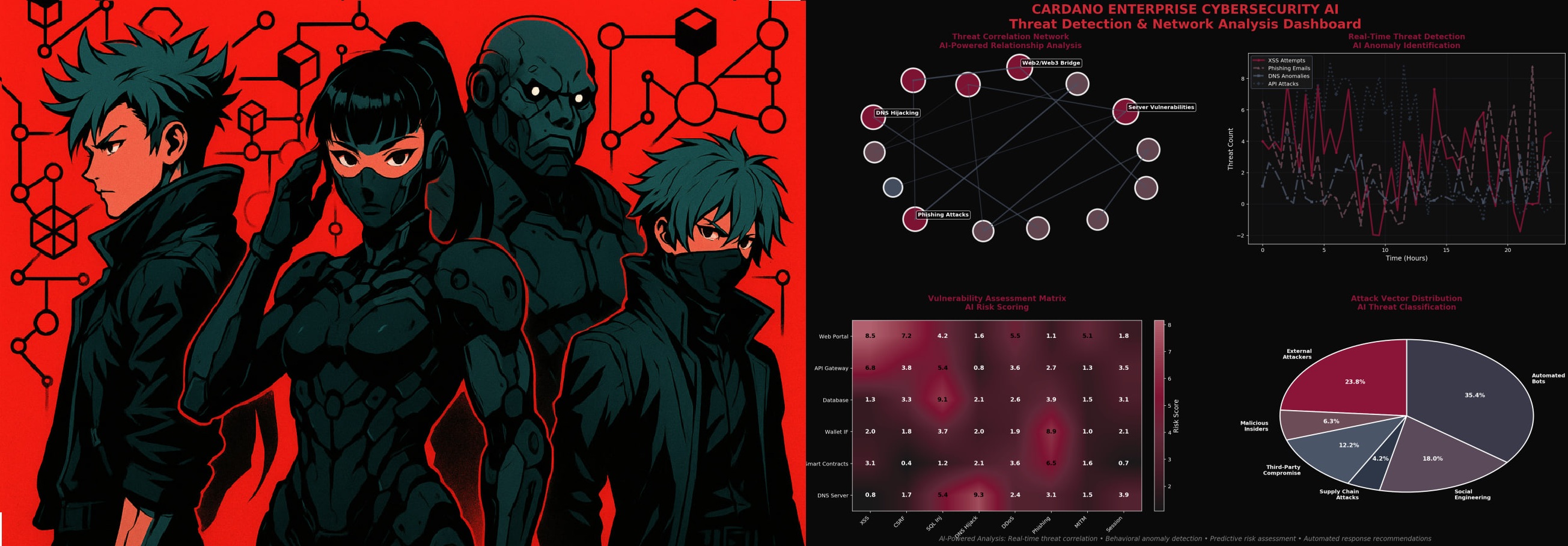
Cardano onboarded enterprises benefit from best of class security and determinism of the blockchain. However, hacks now go beyond smart contract exploits and hackers increasingly target web2/web3 interfaces like wallet plugins, dApp integrations, ross-site scripting (XSS), AI-enabled phishing and DNS hijacking, and server-side vulnerabilities.

FOCUS ON Business reports: New research shows that rising threats like malware, phishing, ransomware, and DDoS attacks are leaving developers scrambling for solutions. The study by Post-Quantum security pioneers Naoris Protocol reports that 95% of Web3 developers have seen increased malware attacks, with 11% noting doubled phishing incidents.
Web3’s Inherited Web2 Vulnerabilities: The Invisible Threat At its core, Web3 still relies on Web2 infrastructure. Most Web3 nodes operate on centralized cloud services like AWS, Google Cloud, or Microsoft Azure. If AWS were to cut off Ethereum tomorrow, the network would face serious disruption.
The Web2 security model—centralized access control—was never designed for Web3’s decentralized nature. This outdated approach clashes with Web3’s reliance on APIs, shared data, and multi-stack technologies. As a result:
Malware: 72% report increases of 25% or more. Phishing: Over one-third say attacks have surged by more than 50%. Ransomware: Nearly half of developers report significant increases. DDoS: 85% see more frequent and impactful attacks. With Web3 still dependent on Web2 devices—many of which lack independent cybersecurity verification—the risks will only escalate. Without a decentralized security model, Web3 remains vulnerable to the same threats plaguing Web2 for decades.
DePIN: The Only Scalable Cybersecurity Solution for Web3 To break free from inherited weaknesses, Web3 must embrace Decentralized Physical Infrastructure Networks (DePIN). Unlike traditional cybersecurity, which relies on centralized security perimeters, DePIN distributes data, processing, and security across a trustless, decentralized network. This eliminates single points of failure and significantly enhances cyber resilience.
The EvadeML-Zoo library provides a series of tools and models, including the following:
- Attacking methods such as FGSM, BIM, JSMA, Deepfool, Universal Perturbations, and Carlini/Wagner-L2/Li/L0
- Pretrained state-of-the-art models to attack
- Visualization of adversarial examples
- Defense methods
- Several ready-to-use datasets, such as, MNIST, CIFAR-10, and ImageNet-ILSVRC
Install the template with thirdweb create
npx thirdweb create app --node --typescript --evmInstall dependencies:
yarnRun the script:
yarn startTo run this project, you will need to add the following environment variables to your .env file:
WALLET_PRIVATE_KEY=paste_your_private_key_here
THIRDWEB_SECRET_KEY=paste_your_secret_key_here-
Generate your
THIRDWEB_SECRET_KEYvia thirdweb's dashboard. -
For
WALLET_PRIVATE_KEYexport your wallet private key from your wallet.
Please visit our open source page for more information.
For help, join the discord or visit our support page.
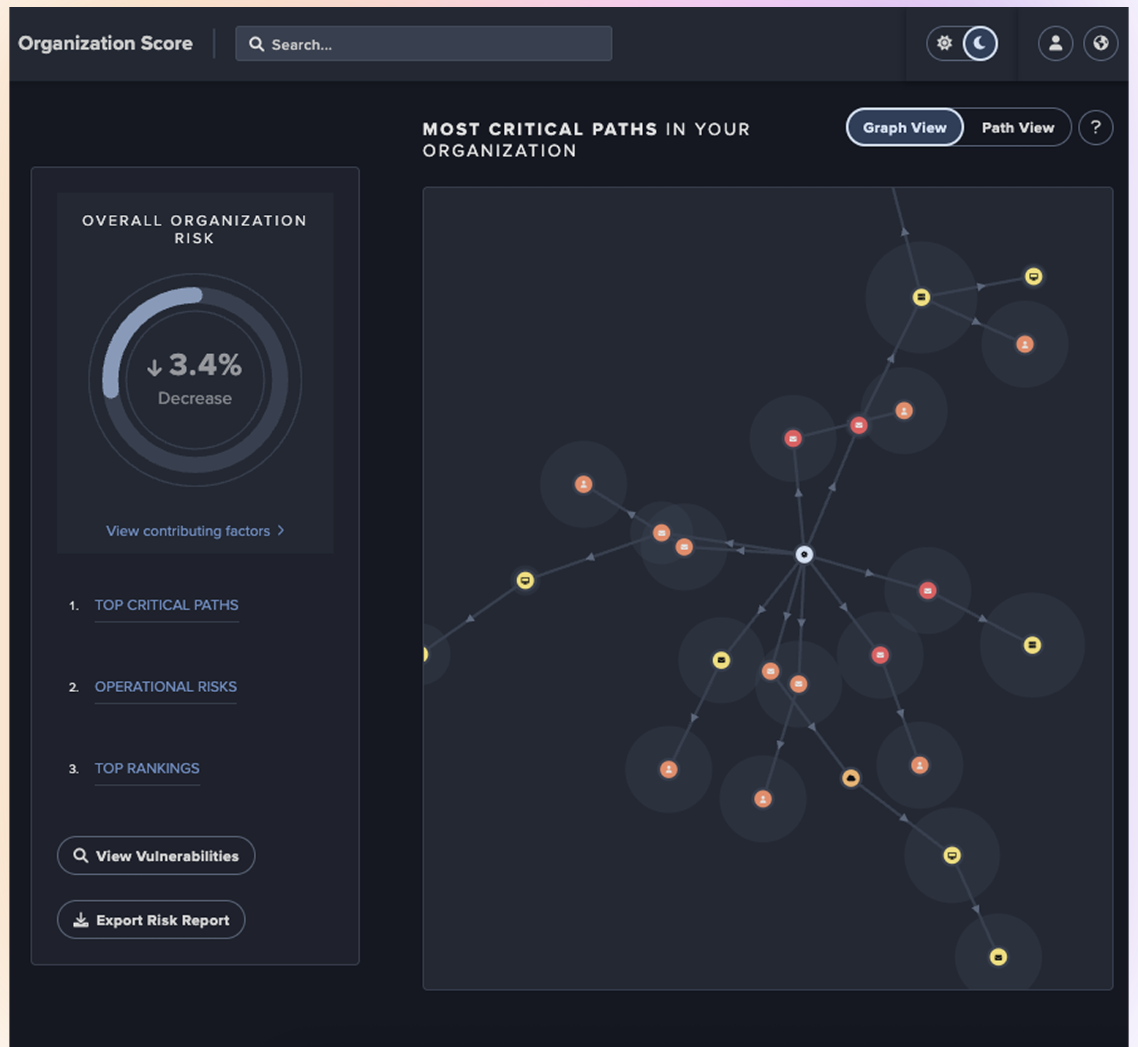
Sample Top-5 enterprise network vulnerability graph