- improve
- abstraction
- file structure
- documentation
- variable names in the famous algorithms like Dijkstra, there is no need to be named the same as in the pseudocode
- add more test cases
- move tests to a different directory
- test without cluttering the main
- clean up README
SDP project, FMI

As Benjamin Franklin famously wrote in 1789, in a letter to Jean-Baptiste Le Roy, who, among other things, was one of the contributors, known as Encyclopédistes, with 108 articles to the Encyclopédie, which was co-edited by the famous and beloved by many students, althought now as much as, among others, Isaac Newton or Augustin-Louis Cauchy, Jean le Rond d'Alembert, who contributed to the same Encyclopédie with 1309 articles, which is an impressive amount, but somewhat diminished by the 17288 articles, about 1/4, contributed by the most prolific Encyclopédistes - Louis de Jaucourt:
    Our new Constitution is now established, and has an appearance that promises
    permanency; but in this world nothing can be said to be certain,
    except death and taxes.
Anyway. As I was questioning my approach to solving the given problems in this project, I thought about other certainties in life, which might help me with my project. I couldn't find any, but I remembered three, which come as close as it gets:
-
If you don't know a word, you can find it in the dictionary. Here is a good one: https://ibl.bas.bg/rbe/
-
If you don't know how to solve an integral, integration by parts.
-
If you have a data structures and algorithms problem, binary search and/or hash tables.
Since there are no specific time/memory constraints on the project and considering that there isn't an uniform solution to various data structure problems I have picked unordered_map. I though it would have been intresting to use unordered_map instead of maybe more classical vector of vector for the adjacency table. Plus we already used map on seminars.
Pros:
- average constant search, insertion, delete
- reference/pointer invalidation only on deletion Cons:
- based on the hashing algorithm used for implementation search, insertion and deletion are to O(n)
- complex data structure - memory overhead
- bad locality of reference
  using Node = std::string;
  using Distance = int;
  using AdjacentTo = std::unordered_map<Node, Distance>;

  std::unordered_map<Node, AdjacentTo*> nodes;
In different scenarion, different data structures might yield optimal results.
- maps have better worst case insertion/deletion - O(log n)
- better for reading the adjacency list and checking if an element is already one, when adding elements
- vectors have O(1) access
- better for implementing the algorithms on the graph
An optimal solution might consist even of a combination of those. Maybe read the graph using a map to guarantee insertion/deletion O(log n) and then copy into a vector of vectors to guarantee O(1) look up.
For this specific problem, speed isn't crutial so the differences between the suggested implementation can be considered negligible.
When performance is critical, use of profiling tools is highly recommended.
Because in a city, most of the crossroads aren't adjacent, and the graph would be too sparse to justify the used memory.
std::unordered_map guarantees References and pointers to either key or data stored in the container are only invalidated by erasing that element, even when the corresponding iterator is invalidated. So the adjacentTo nodes could be
references to the nodes in the nodes map, but too much early optimization
is not cool.
std::string_view can be used to optimize the nodes memory.
Plus I don't know how exactly std::string works.
I guess the compiler does a pretty good job at optimising the memory anyway...
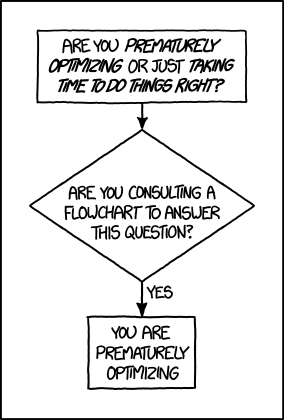
see one above
I was wondering if string_view does really improve something so, I used time(1)
/usr/bin/time -f "real %e\nuser %U\nsys %S\nmem %M\ncpu %P" ./f
       %e     (Not in tcsh(1).)  Elapsed real time (in seconds).
       %U     Total number of CPU-seconds that the process spent in user
              mode.
       %S     Total number of CPU-seconds that the process spent in
              kernel mode.
       Memory
       %M     Maximum resident set size of the process during its
              lifetime, in Kbytes.

       %P     Percentage of the CPU that this job got, computed as (%U + %S) / %E.
I did four test of just creating a CityMap object and reading all elements from a file. Tried with two different test files, generated like this:
  int N {1000};

  for (int i{1}; i < N; ++i) {
    std::cout << i << ' ';
    for (int j{1}; j < N; ++j) {
      if (j != i) {
        std::cout << j << ' ' << j << ' ';
      }
    }
    std::cout << std::endl;
  }
First was with N = 1000 and second N = 10000
And here are the results (time in s, mem in KB):
# N = 1000
# using AdjacentTo = std::unordered_map<Node, Distance>;
real 14.97
user 14.87
sys 0.08
mem 75552
cpu 99%

# N = 1000
# using AdjacentTo = std::unordered_map<std::string_view, Distance>;
real 13.84
user 13.76
sys 0.06
mem 59956
cpu 99%

# N = 1000
# using AdjacentTo = std::unordered_map<std::string_view, Distance>;
# const & all the way

real 10.82
user 10.76
sys 0.04
mem 59972
cpu 99%

# N = 10000
# using AdjacentTo = std::unordered_map<Node, Distance>;
real 1553.97
user 1548.10
sys 3.98
mem 7058168
cpu 99%

# N = 10000
# using AdjacentTo = std::unordered_map<std::string_view, Distance>;

real 1423.62
user 1418.30
sys 3.31
mem 5494924
cpu 99%

# N = 10000
# using AdjacentTo = std::unordered_map<std::string_view, Distance>;
# const & all the way

real 1016.55
user 1013.67
sys 2.16
mem 5495180
cpu 99%
only string_view vs string:

max memory:
N =  1 000:   59956 / 75552     = 0.79357

N = 10 000: 5494924 / 7058168   = 0.77852

user time:
N =  1 000:  13.76  / 14.87     = 0.92535
N = 10 000: 1418.30 / 1548.10   = 0.91616


string_view and arguments as references vs string and copies:

max memory:
N =  1 000:  59972  / 75552     = 0.79378
N = 10 000: 5495180 / 7058168   = 0.77856

user time:
N =  1 000:  10.76  / 14.87     = 0.72360
N = 10 000: 1013.67 / 1548.10   = 0.65478
I got about 20% less max memory used to store the whole data,
and about 8% of time improvement to read the whole data. It's something.
on reading 100M nodes in memory the performance improvement is
about 22% less memory and 35% faster.
Copies are so slow...
“Immature poets imitate; mature poets steal;"
    - T.S Eliot
also I ran g++'s profiler gprof just for fun: -https://ftp.gnu.org/old-gnu/Manuals/gprof-2.9.1/html_mono/gprof.html#SEC4
makeruns creates the necessary object and dependencies files, compiles, then it runs the tests and runs the program itselfmake cleanbefore commiting run to clean unnecessary files like object files and the exegitignore ignores them anywaymake testto build and run only the test
- https://stackoverflow.com/questions/30573481/path-include-and-src-directory-makefile/30602701
- https://makefiletutorial.com/
- https://www.gnu.org/software/make/manual/make.html
- https://github.com/onqtam/doctest
- commands
./fruns both doctests and the programme itself./f -nrruns only the programme./f -eruns only the doctests./f -ts=graphruns only tests in suite graph-ts --test-suite=<filters>- more commands: https://github.com/onqtam/doctest/blob/master/doc/markdown/commandline.md
- because it helps the autocomplete on my config
- private methods testing workaround doctest/doctest#427, but with a friend for better encapsulation
- I thought
makewas an alias formake all. It is not. Apparantly make just builds the first target in the Makefile
These three lines caused a big fuss:
    CHECK((d == std::make_pair("a", "d")
           || d == std::make_pair("g", "h")
           || d == std::make_pair("g", "i")));
$ make 2> err
    echo -Iincludes -Idoctest -MMD -MP
    -Iincludes -Idoctest -MMD -MP
    g++ -Iincludes -Idoctest -MMD -MP -Wall -Werror -std=c++20 -c sources/graph.cpp -o objects/graph.o
$ wc err
  2453  12544 181304 err
a few tests compare the returned list with prechecked lists of results, which sort of relies on the deterministic properties of the unordered_map iterator, but maybe to others too
Guess the command, the user intended to type with levenshtein distance. Currently the levenshtein distance function is reccursive and is inpractical for long words...
Update with direct implementation of the pseudocode from wikipedia to improve speed by a lot - it's now practical for long words
In this example for i from 0 to n includes i == n
but this one for k from 1 to K doesn't include k == K
Spent a few hours searching for a std::bad_alloc error because I misinterpreted a pseudocode for loop, adding an extra iteration in some cases... I had written this:
for i from 0 to size(A[k − 1]) − 2:
like this:
for (int i{}; i < size - 1; ++i) {
instead of this:
for (int i{}; i < size - 2; ++i) {
- wrap
- exceptions
- input validation
- BFS:
bool isPath(Node from, std::optional<Node> to = std::optional<Node>())
- Yen's algorihtm with Dijkstra:
- note: Yen's algorithm doesn't count loops
std::vector<Path> kTHShortestPath(Node from, Node to, int K, std::set<Node>
                                    nodesToIgnore = std::set<Node>());
- same as 2: Yen's:
- note: Yen's algorithm doesn't count loops
std::vector<Path> kTHShortestPath(Node from, Node to, int K, std::set<Node>
                                    nodesToIgnore = std::set<Node>());
- BFS from 1. :
bool isPath(Node from, std::optional<Node> to = std::optional<Node>())
- Hierholzer's algorithm:
Path findEulerianPath(std::unordered_set<Node> nodesToIgnore =
                      std::unordered_set<Node>());
- if we need a cycle, the first and last elements of the list, should be the same
- same as 1. and 4. BFS:
bool isPath(Node from, std::optional<Node> to = std::optional<Node>())
- get all the nodes with no adjacent to nodes. check if any node is adjacent to one of those:
std::list<std::pair<std::string, std::string>> getDeadEnds()